Hand Written
a reflection on AI writing for us, and the importance of continuing to write for ourselves.
i’ve been feeling the desire to write more, especially right now as much of our writing seems to be outsourced to machines that are trained to produce the sum of averages. remember when this comic was a funny joke instead of our daily reality?
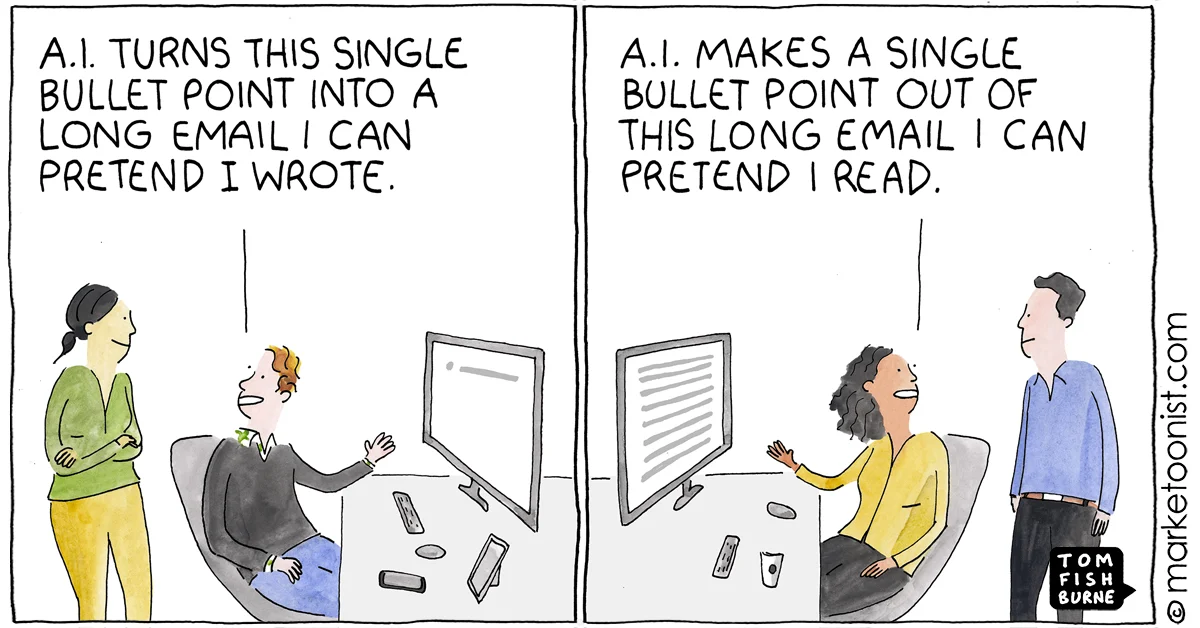
AI Written, AI Read cartoon by Tom Fishburne (March 2023)
that was only three and a half years ago. at the time, it felt easy enough for me to conclude that only things that didn’t need to be written (or read) would be generated and summarized by AI, the “this meeting could’ve been an email” type. but it’s clear that many of us11 myself included 🙋♂️ are (sometimes blindly) delegating any sort of multi-paragraph document or slack update at least partially to AI.
it’s been happening enough that some company leaders have publicly shared their policies. Varun Anand kicked it off by sharing Clay’s AI Writing Policy22 it makes perfect sense to me that this was initially written for the engineering org by Sophie Alpert and then expanded company-wide. engineering has had strong adoption of AI at many companies and is likely experiencing a glut of AI-generated text (partly because we’re becoming numb to it)..
other CEOs piled on starting with Dylan Field (Figma):
if you use AI in your writing process, add “written with AI” at the top.
and Ishan Goswami (Exa):
AI generated writing is banned.
No external comms (tweets/linkedIn post/and more) can be AI written, and everything needs to be hand written.
“If you don’t take the time to write it, why should anyone take the time to read it.”
these seem like pretty harsh stances, but they’re resonating with people who are tired of slop grenades being thrown into a slack thread or feeling like the first one trying to understand the RFC or PR description.
what started out as a “better grammarly” or helping “automate the tedious parts” has very quickly started writing entire status updates, documents, and press releases.33 or at the very least the first drafts of those things.
i’ve [of course] been guilty of this myself: steering RFCs instead of writing them, editing PR descriptions that were drafted by AI, and asking AI to write a slack update summarizing a launch instead of deeply thinking about what was important to communicate about it.
Frank Herbert’s writing from Dune has been shared a lot lately, and it seems like a fitting way to end this short post.
Once, men turned their thinking over to machines in the hope that this would set them free. But that only permitted other men with machines to enslave them.
writing is thinking, and we desperately need to keep thinking.
-
myself included 🙋♂️ ↩︎
-
it makes perfect sense to me that this was initially written for the engineering org by Sophie Alpert and then expanded company-wide. engineering has had strong adoption of AI at many companies and is likely experiencing a glut of AI-generated text (partly because we’re becoming numb to it). ↩︎
-
or at the very least the first drafts of those things. ↩︎